Espacio Negativo How many women designers can you name?
Rewriting the History of Design
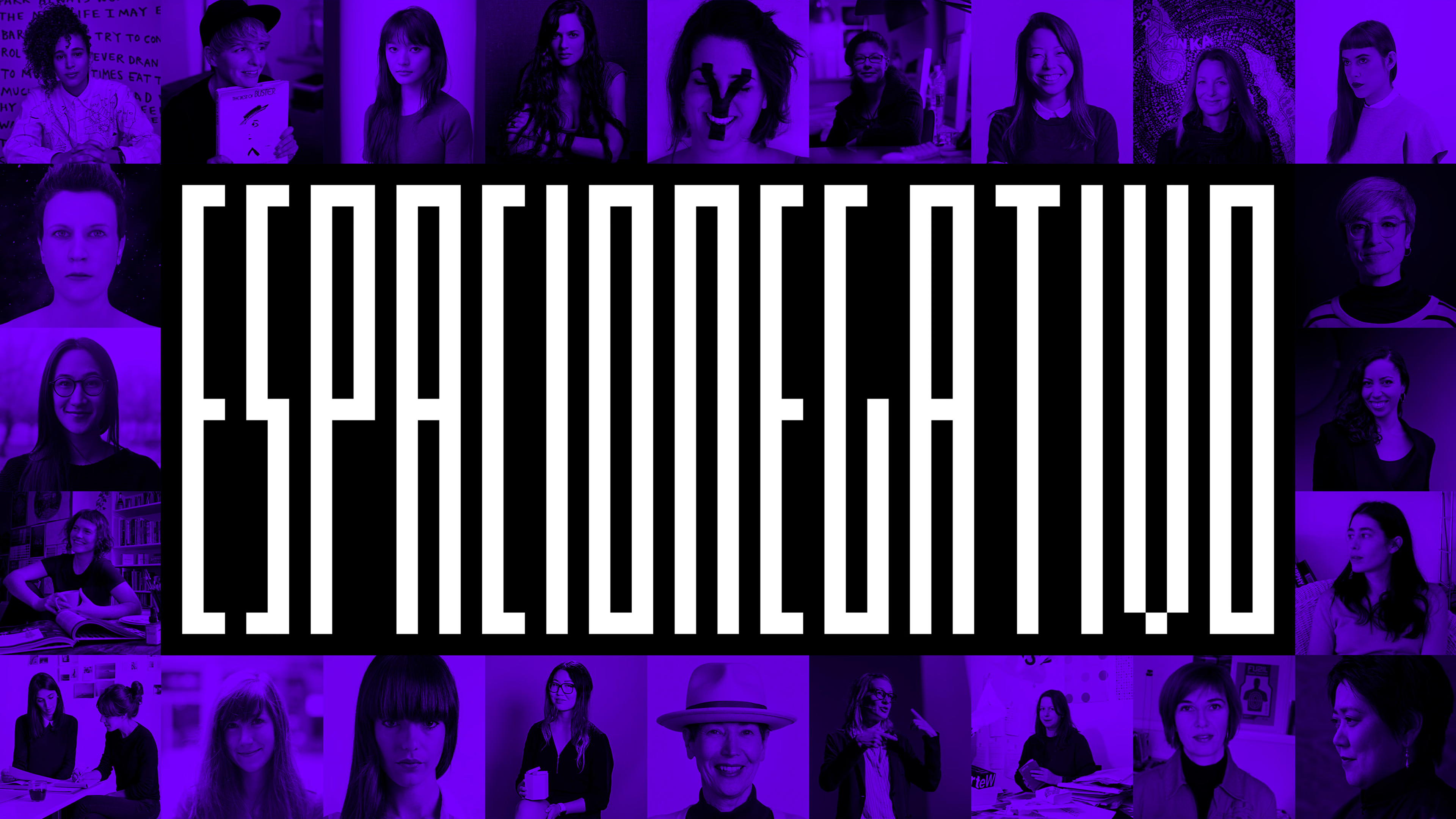
Espacio Negativo is an interactive database dedicated to uncovering, documenting and celebrating the women designers who have been overlooked throughout the history of visual communication. Born as a Graphic Design final degree project, the initiative turns a fundamental design concept — negative space, the empty space that gives shape and meaning to what we see , into a metaphor for the systematic absence of women from official design narratives. Through an interactive archive organized by historical periods, design movements and areas of expertise, the project makes their contributions accessible, discoverable and impossible to overlook. More than a database, Espacio Negativo is an invitation to rethink design history and give visibility to the voices that helped shape it.
Making Noise, Breaking Silence
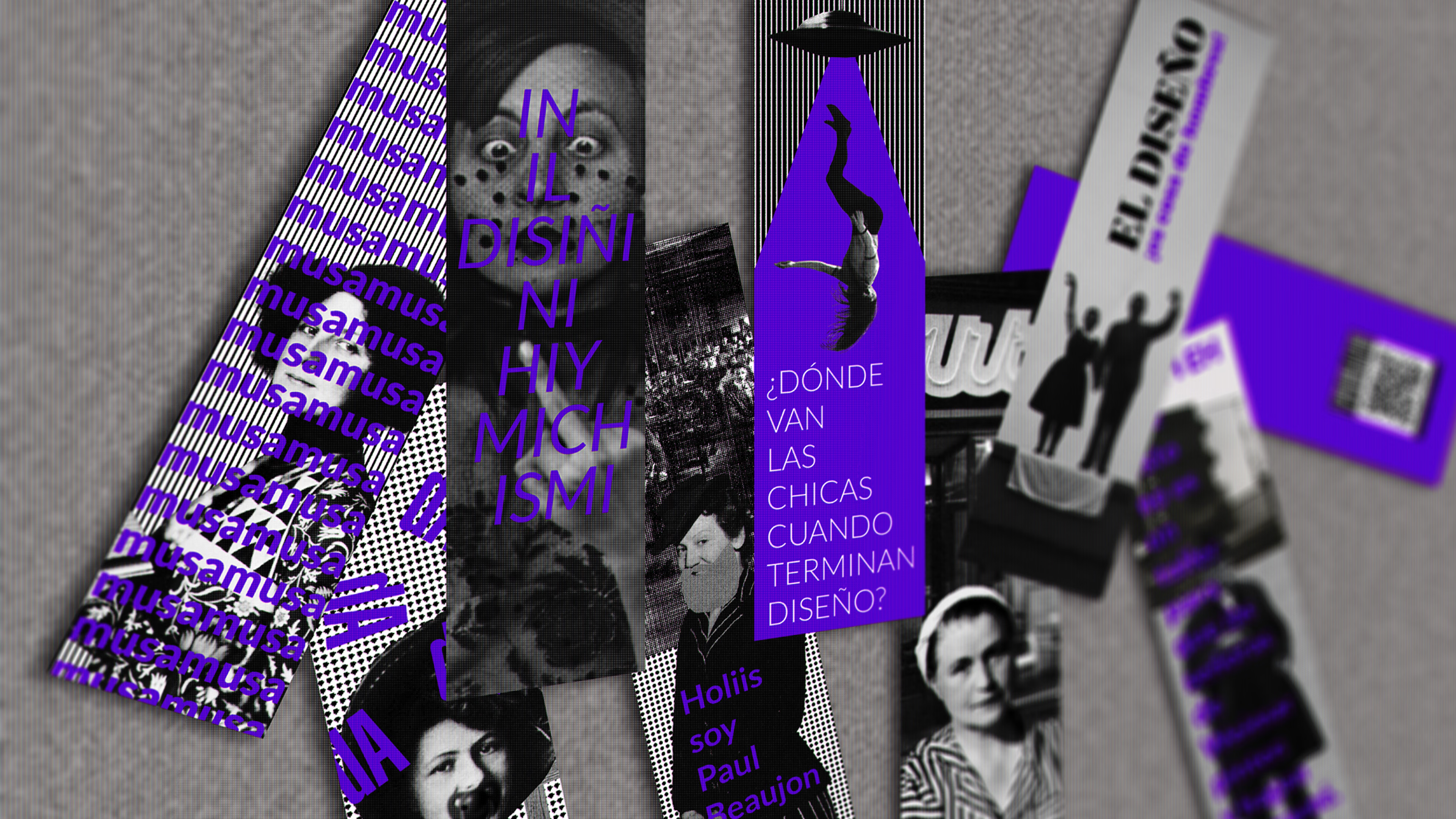
To bring the project beyond the digital archive, I developed a provocative visual campaign designed to challenge, question and spark conversation. Using dark humour, irony, visual metaphors and unexpected juxtapositions, the posters turn historical facts into bold, confrontational messages. Through photomontage, collage and visual appropriation, the campaign reclaims familiar imagery to expose the contradictions behind women's recognition in design. Inspired by protest graphics and countercultural movements, the visual language combines black, white and vivid purple with bold typography and patterns derived from QR codes — a nod to the interconnected nature of the digital archive.
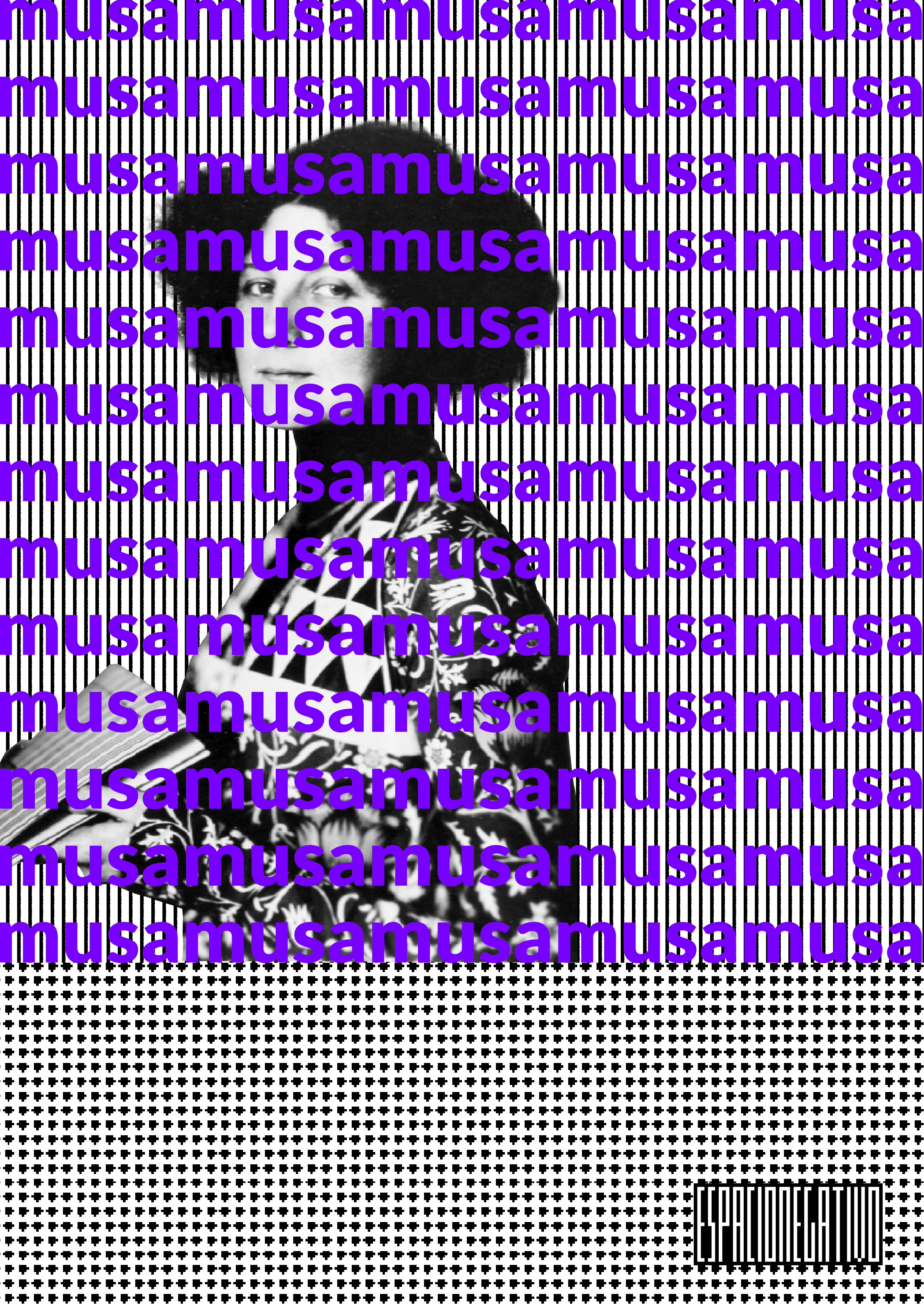
Emilie Flöge
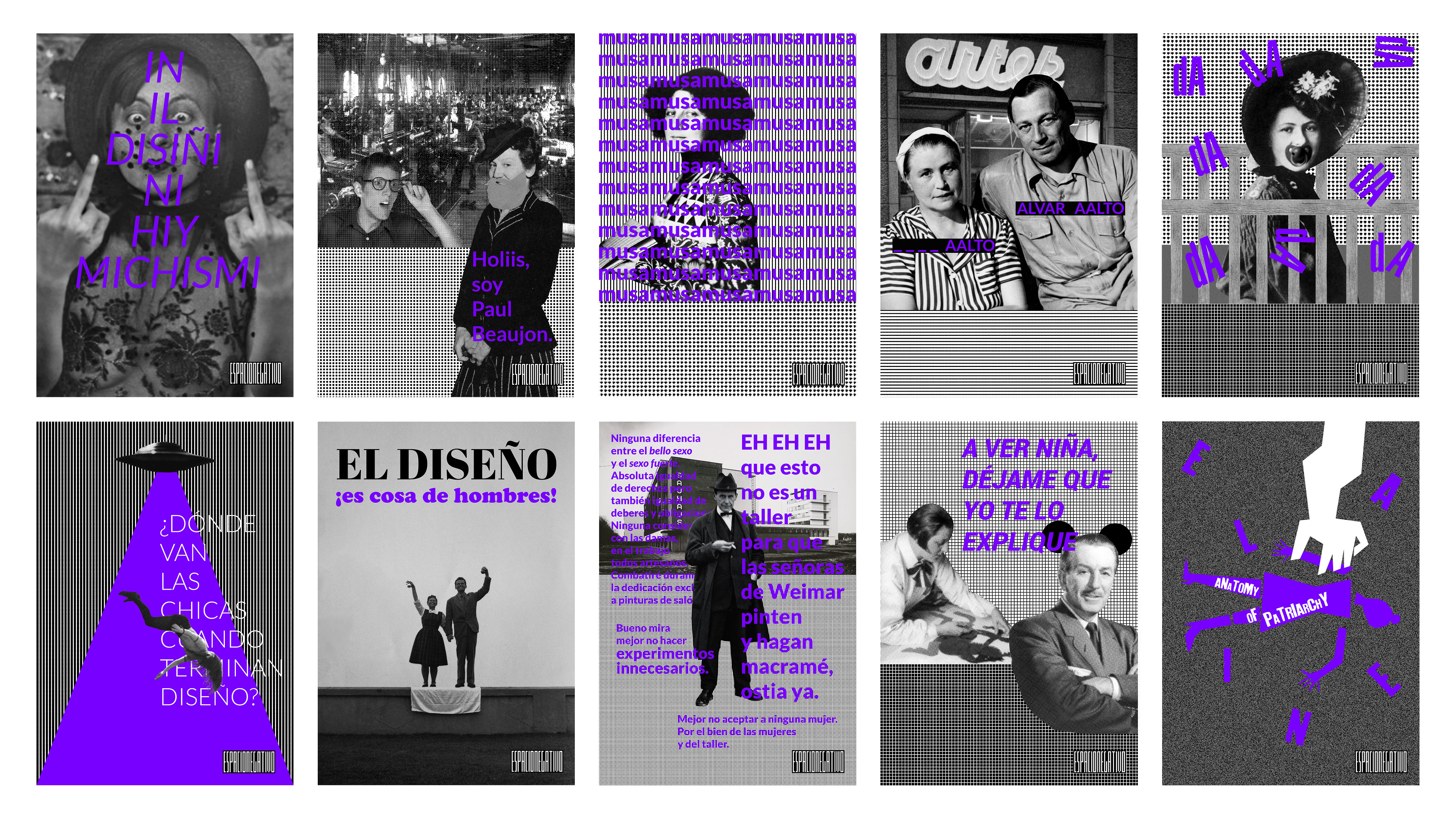
Emilie Flöge was an Austrian fashion designer and entrepreneur, often remembered primarily as Gustav Klimt's muse and companion. Her innovative, loose-fitting dresses challenged the restrictive corsets of her time, promoting freedom of movement. In this poster, she is visually trapped behind a block of text containing a single word: MUSE. The horizontal lines in the background become prison bars, symbolising how her own creative identity was confined to her relationship with a famous man.
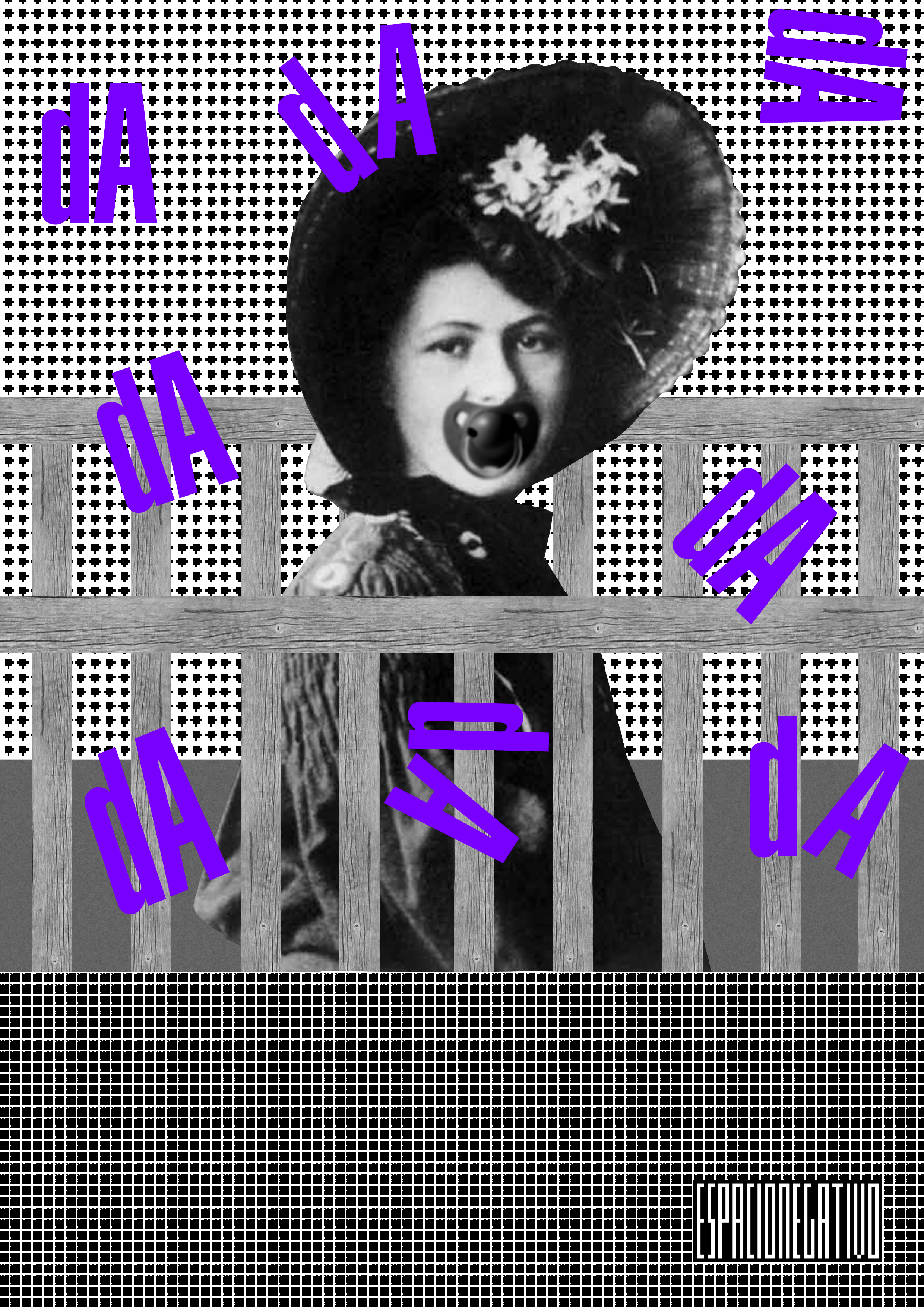
Sophie Taeuber-Arp
Inspired by the visual language of Dada, this composition explores the infantilization of women. A playful yet critical take on how women's talent and authority are often undermined by patronizing attitudes.
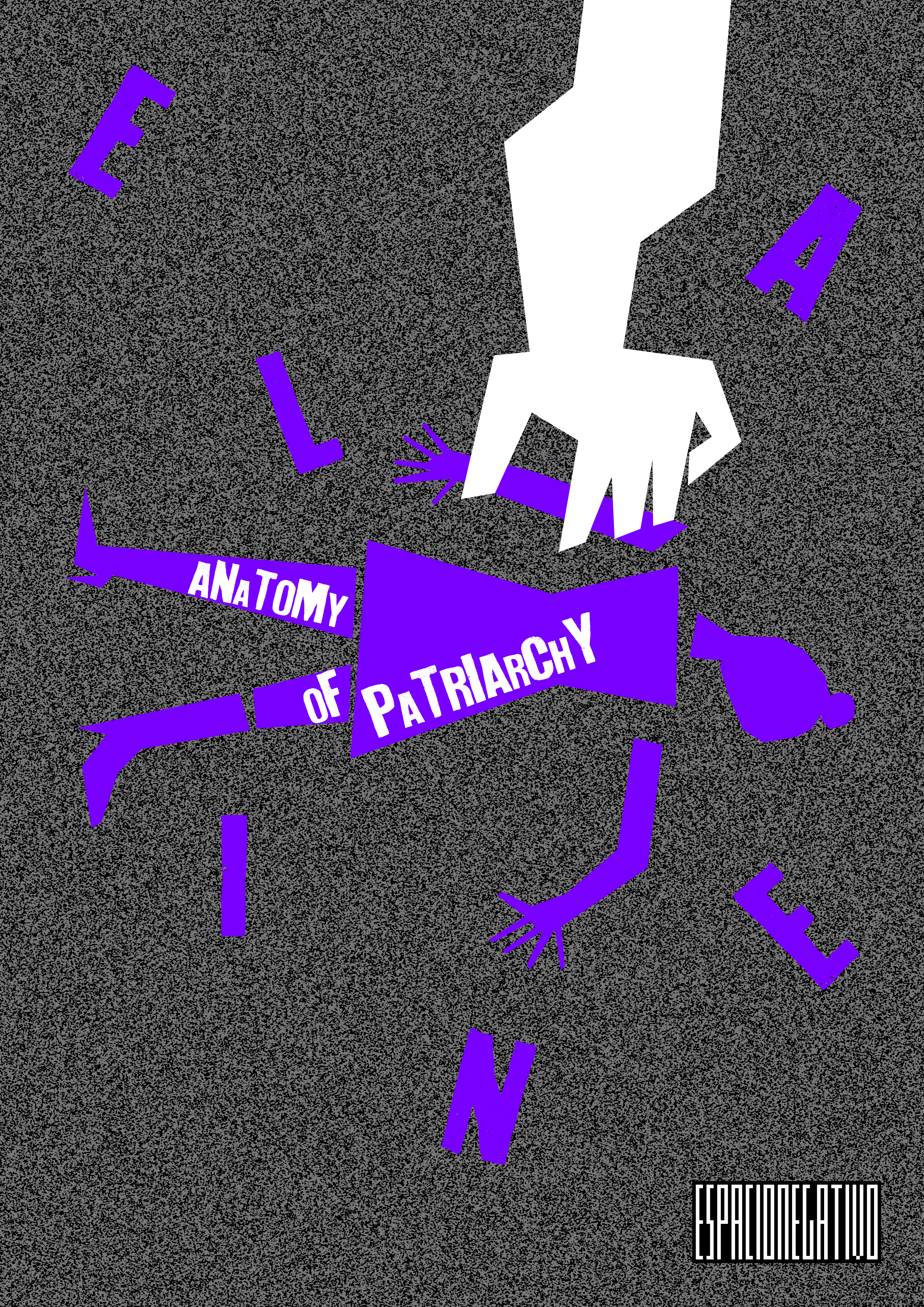
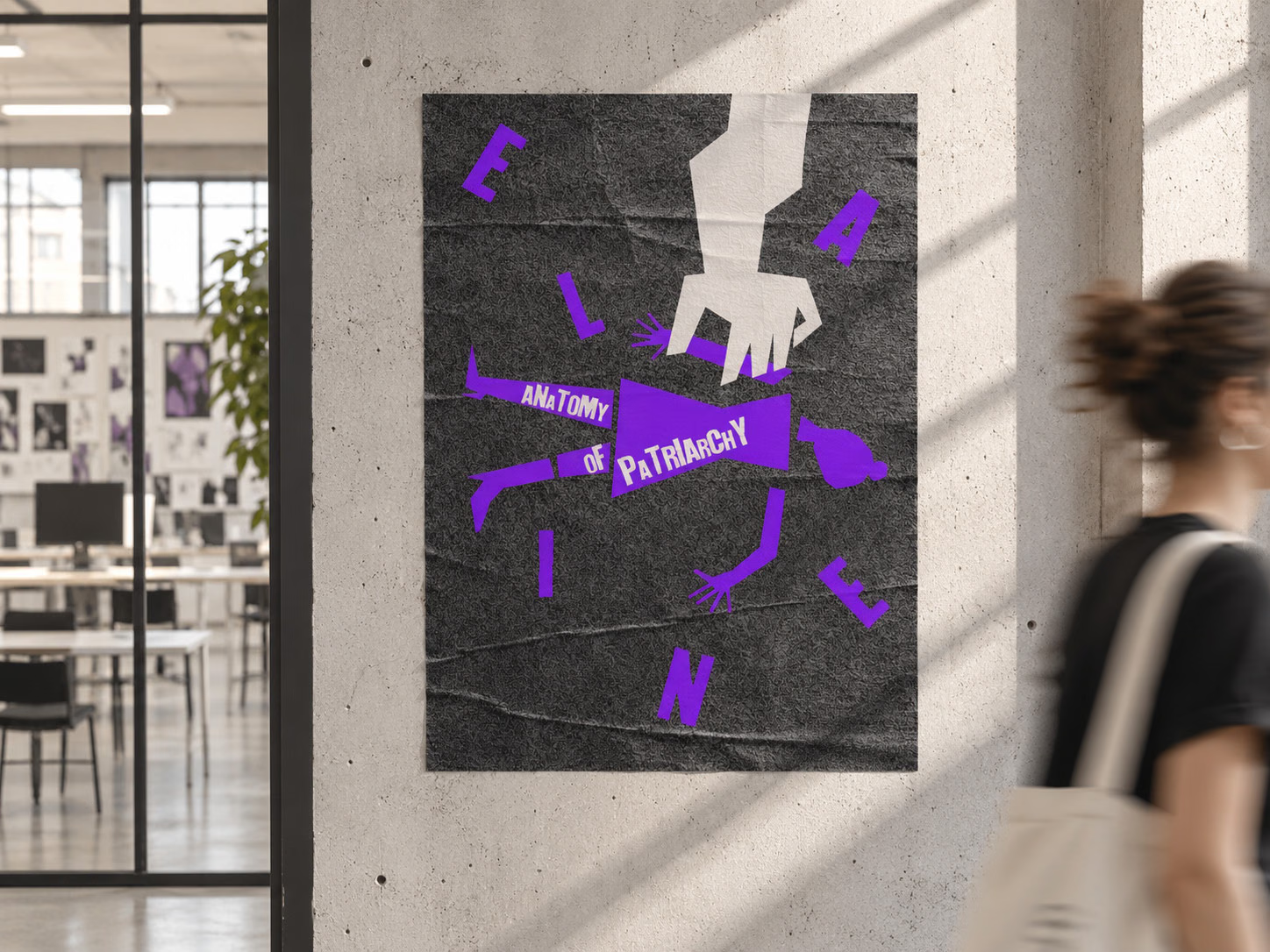
Elaine Bass
Inspired by the iconic visual language of Anatomy of a Murder, this poster reinterprets the original composition to explore the erasure of Elaine Bass, whose creative contributions alongside Saul Bass have often received far less recognition. The fragmented female figure and scattered letters spelling "ELAINE" become a visual metaphor for an identity and body of work broken apart, overlooked and lost within someone else's legacy.
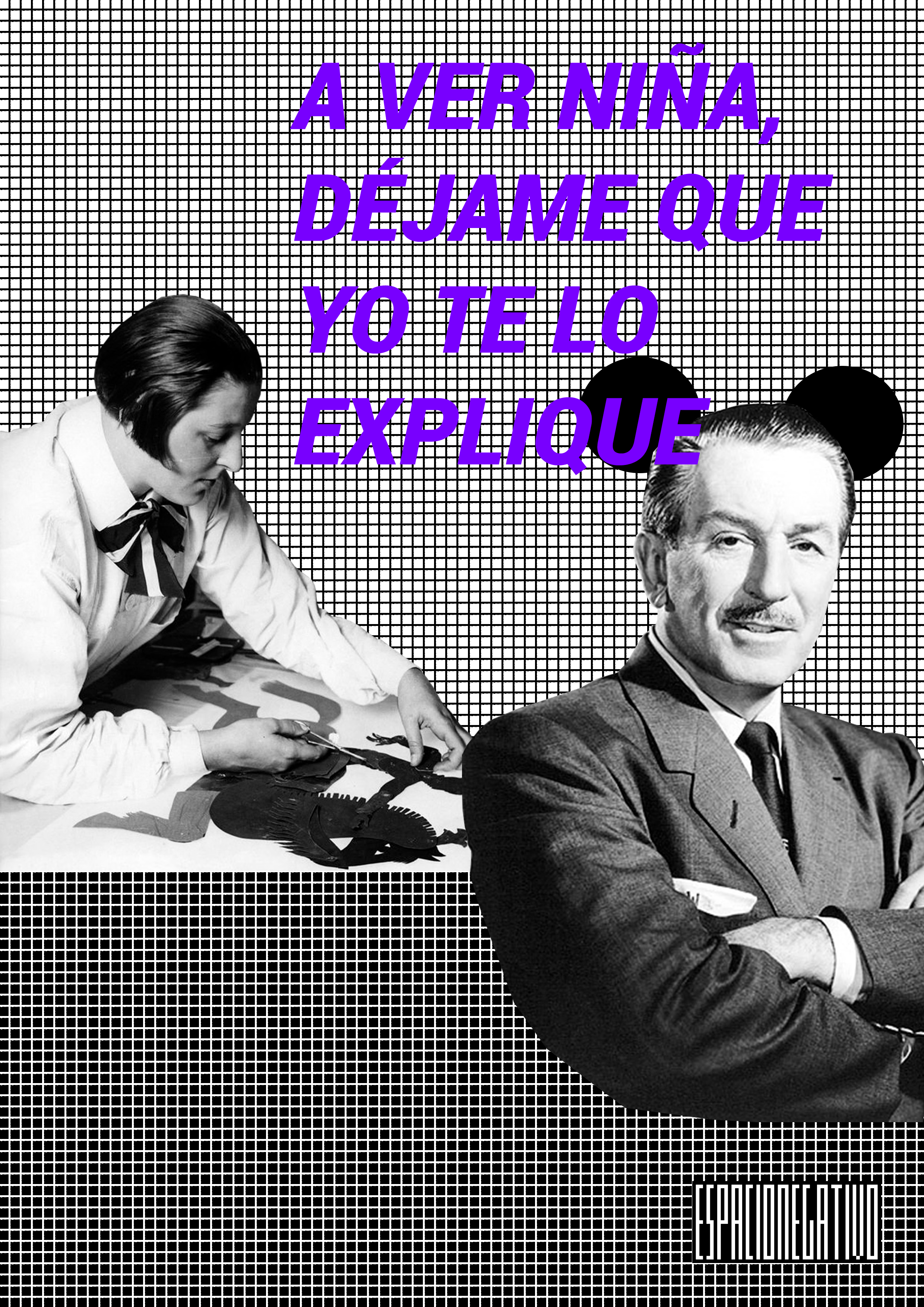
Lotte Reiniger
A visual confrontation between Lotte Reiniger, pioneer of silhouette animation, and Walt Disney. The phrase "Let me explain that to you, little girl" uses irony and sarcasm to expose the condescending attitudes women have historically faced, even when they were pioneers in their own fields.
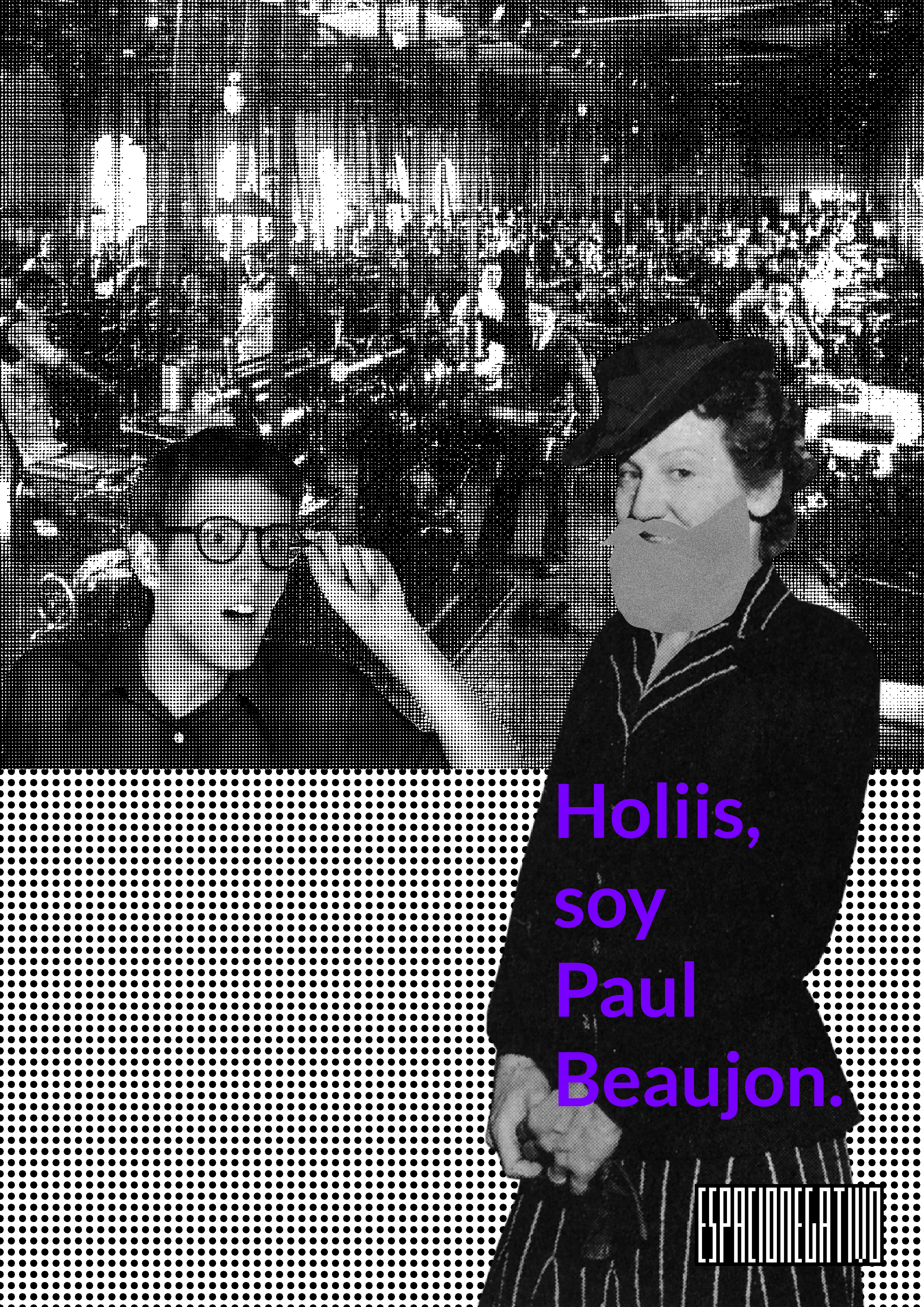
Beatrice Warde
Beatrice Warde was an American typographic historian, writer and lecturer, best known for her influential essay The Crystal Goblet. In 1926, she published an extensive study on the origins of Garamond typefaces in The Fleuron, signing it under the male pseudonym Paul Beaujon, as women's expertise was rarely taken seriously. The article attracted Monotype's attention, and the company offered Paul Beaujon a position as editor of The Monotype Recorder. The surprise came when a woman, rather than the expected man, showed up for the job. The poster highlights the absurdity of a system in which her expertise needed a male identity to be recognised.
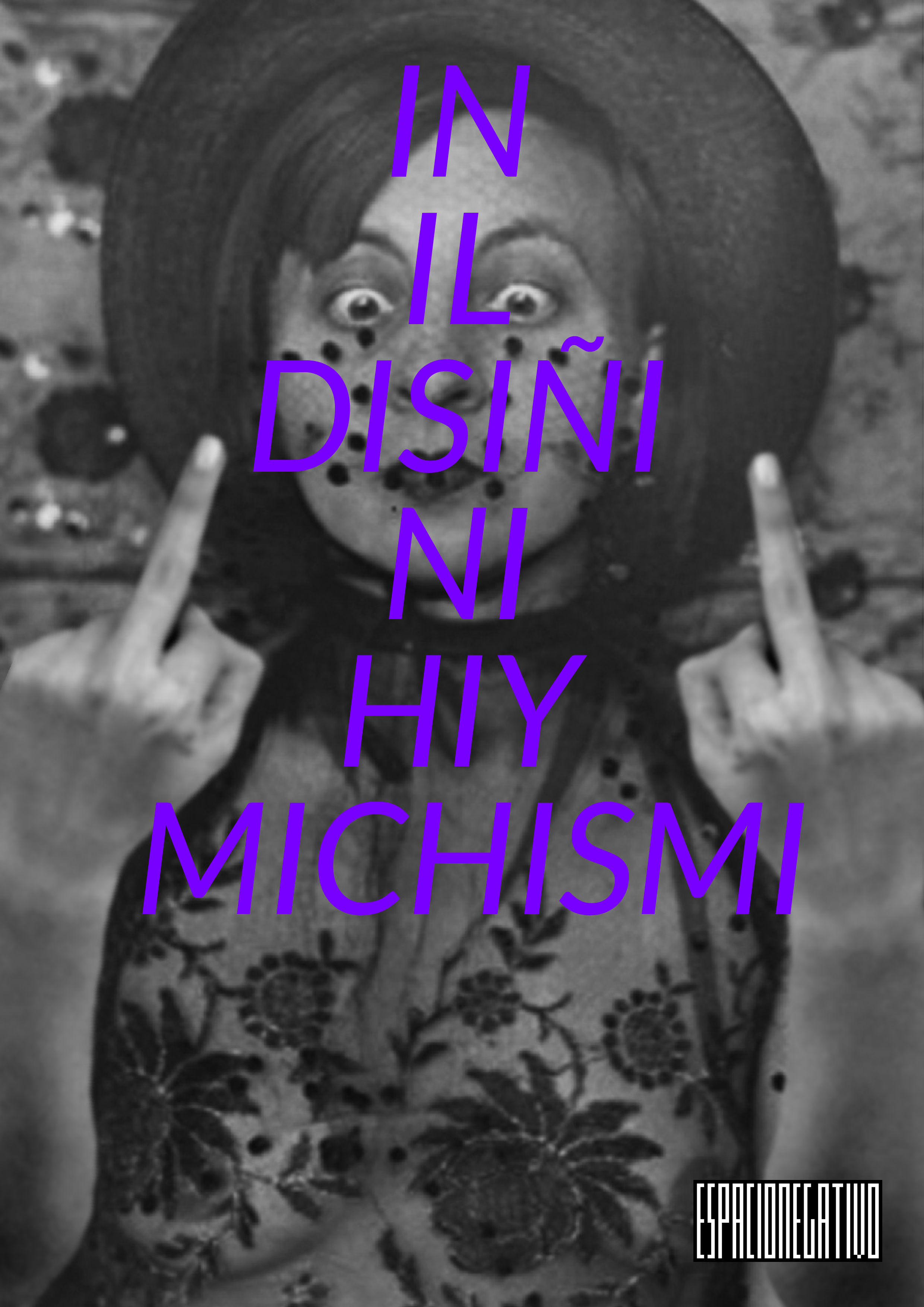
Gertrud Hantschk
A German photographer and Bauhaus student, this poster uses visual intervention and humour to subvert the original image. Overlaid with the statement “There is no sexism in design”, the message uses sarcasm and dark humour to challenge the denial of gender inequality in the industry.
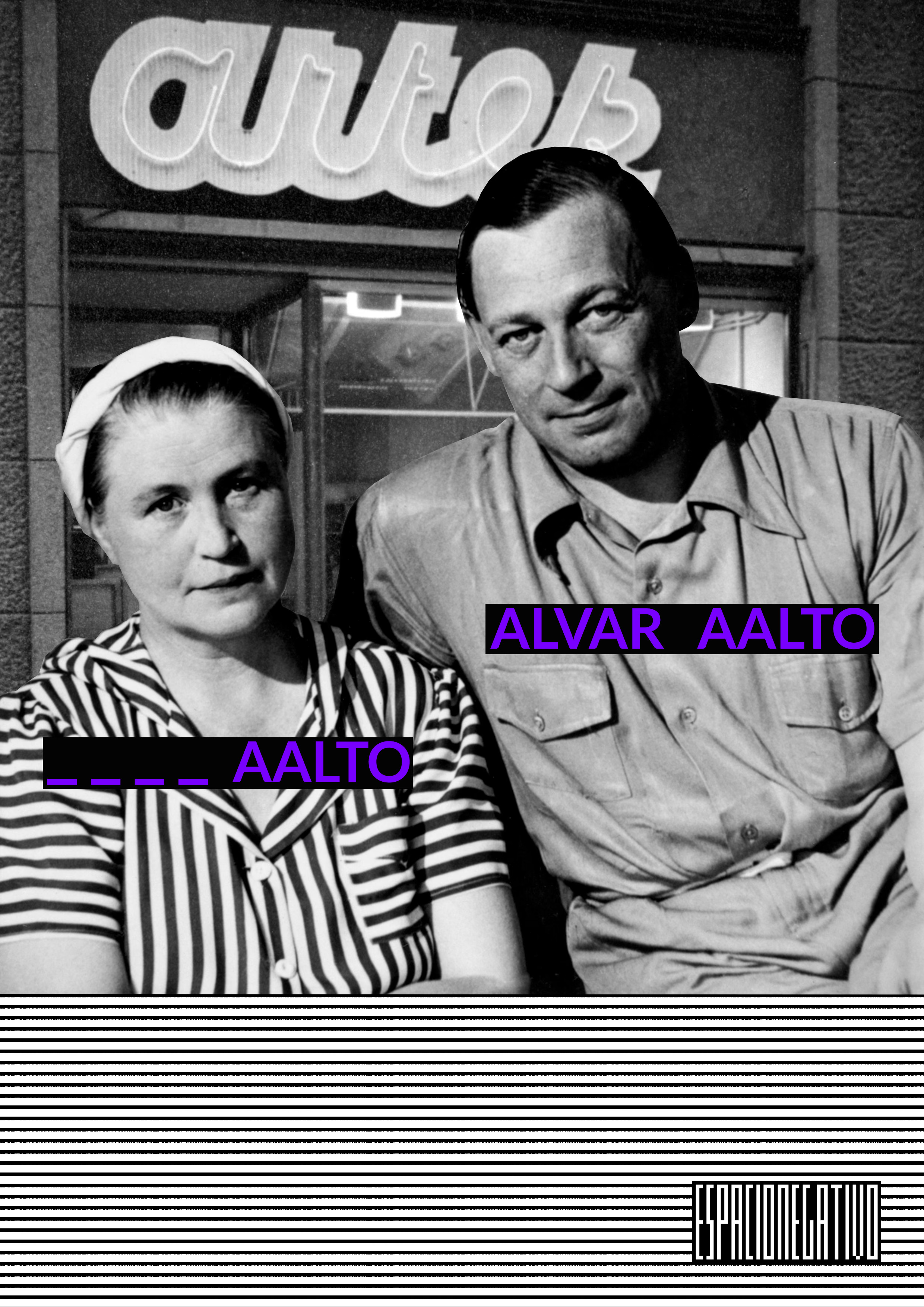
Aino Aalto
She was an architect and designer, and co-founder of Artek alongside her husband Alvar Aalto. She played a key role in the company's creative direction and became its CEO and creative director. Yet, her name is often overshadowed by her husband's. The poster deliberately removes her name, leaving viewers with a simple question: do you remember what she was called?
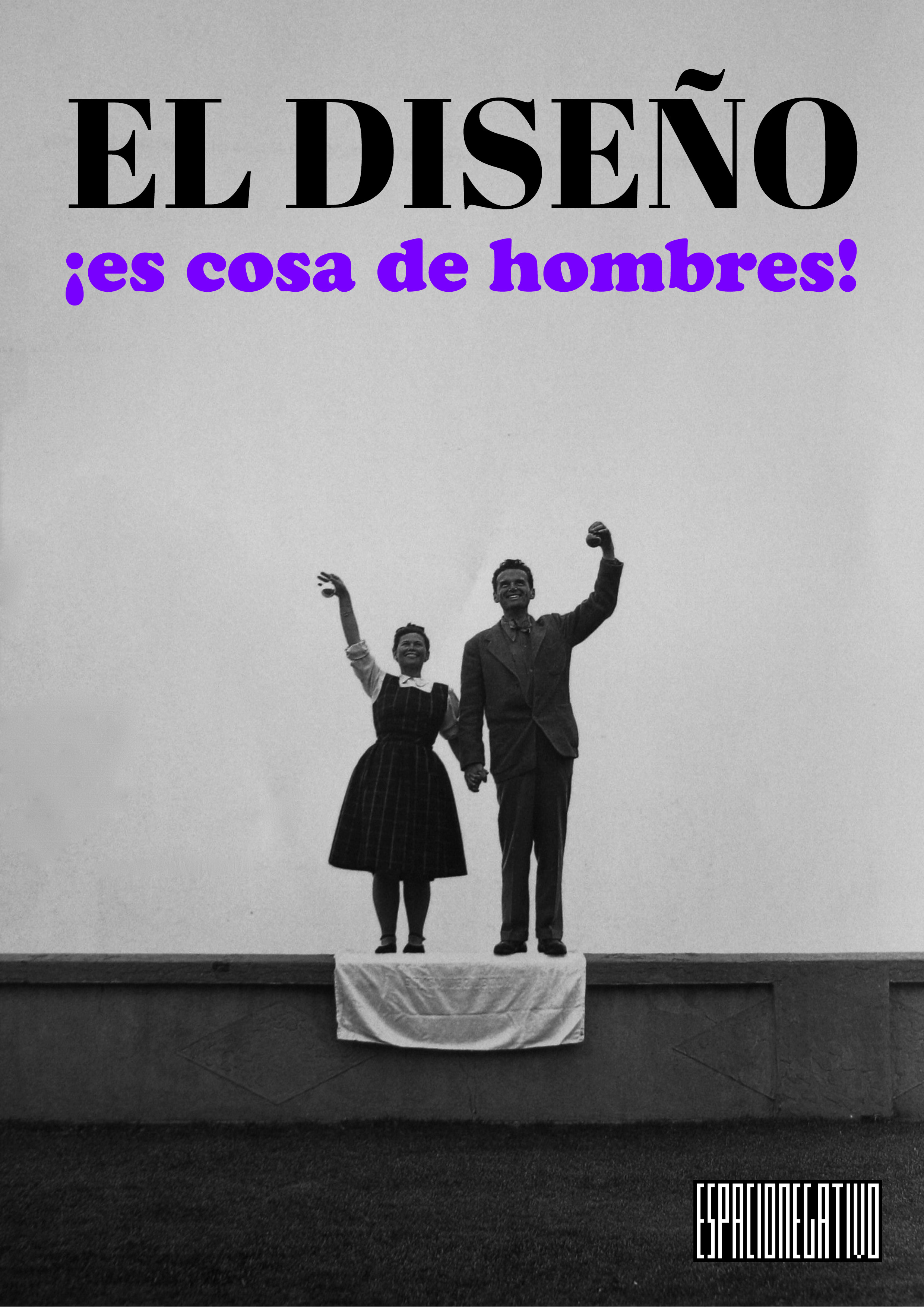
Ray Eames
Borrowing the visual language of a classic advertising campaign, this poster appropriates the slogan "Soberano, it's a man's thing" to question the way creativity, authorship and professional recognition have historically been associated with men — even when the work was shared.
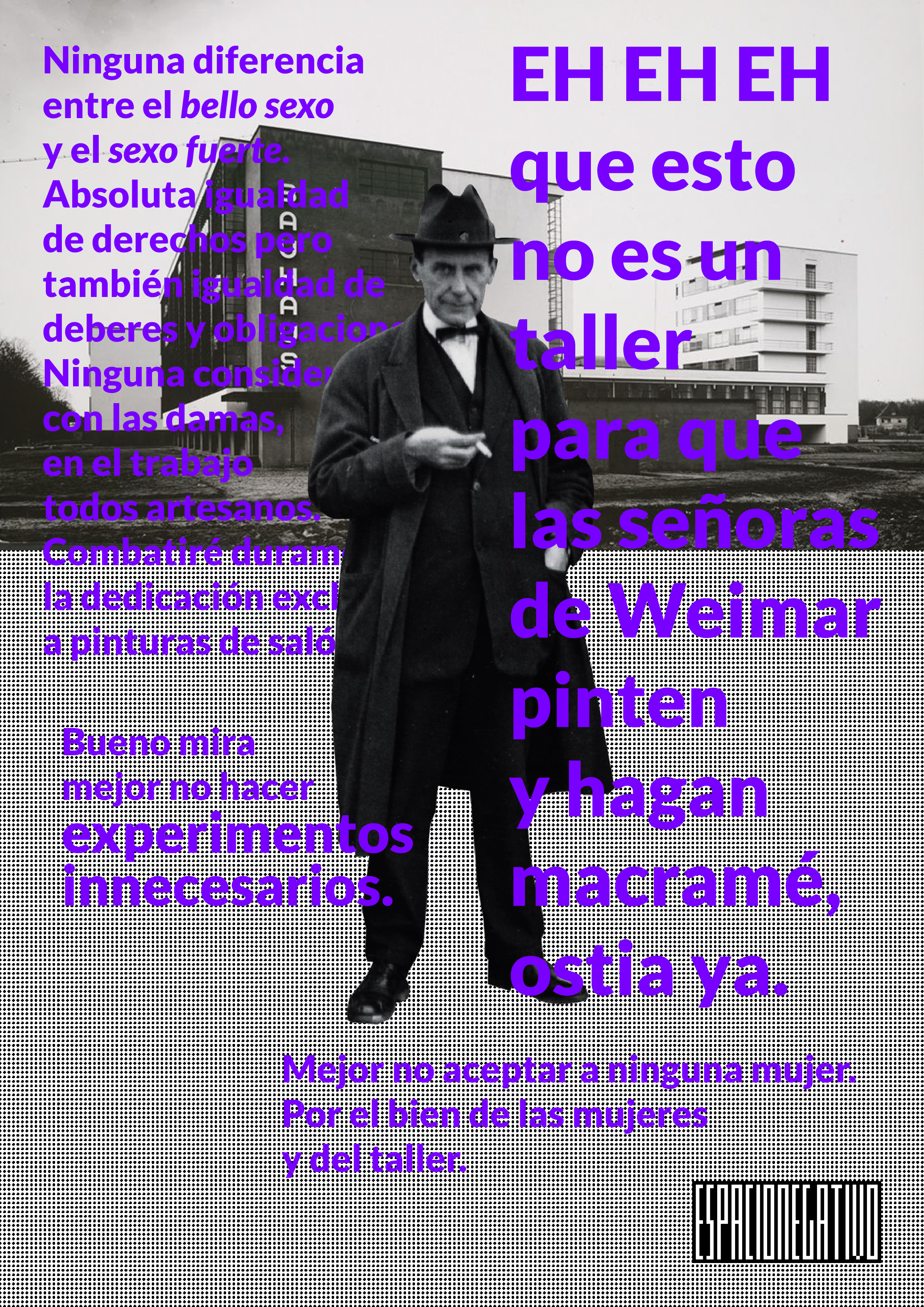
Women of the Bauhaus
Using documented statements by Walter Gropius, this poster exposes the contradictions between the Bauhaus's progressive ideals and its treatment of women. A closer look at the gender barriers embedded within one of design history's most influential schools.
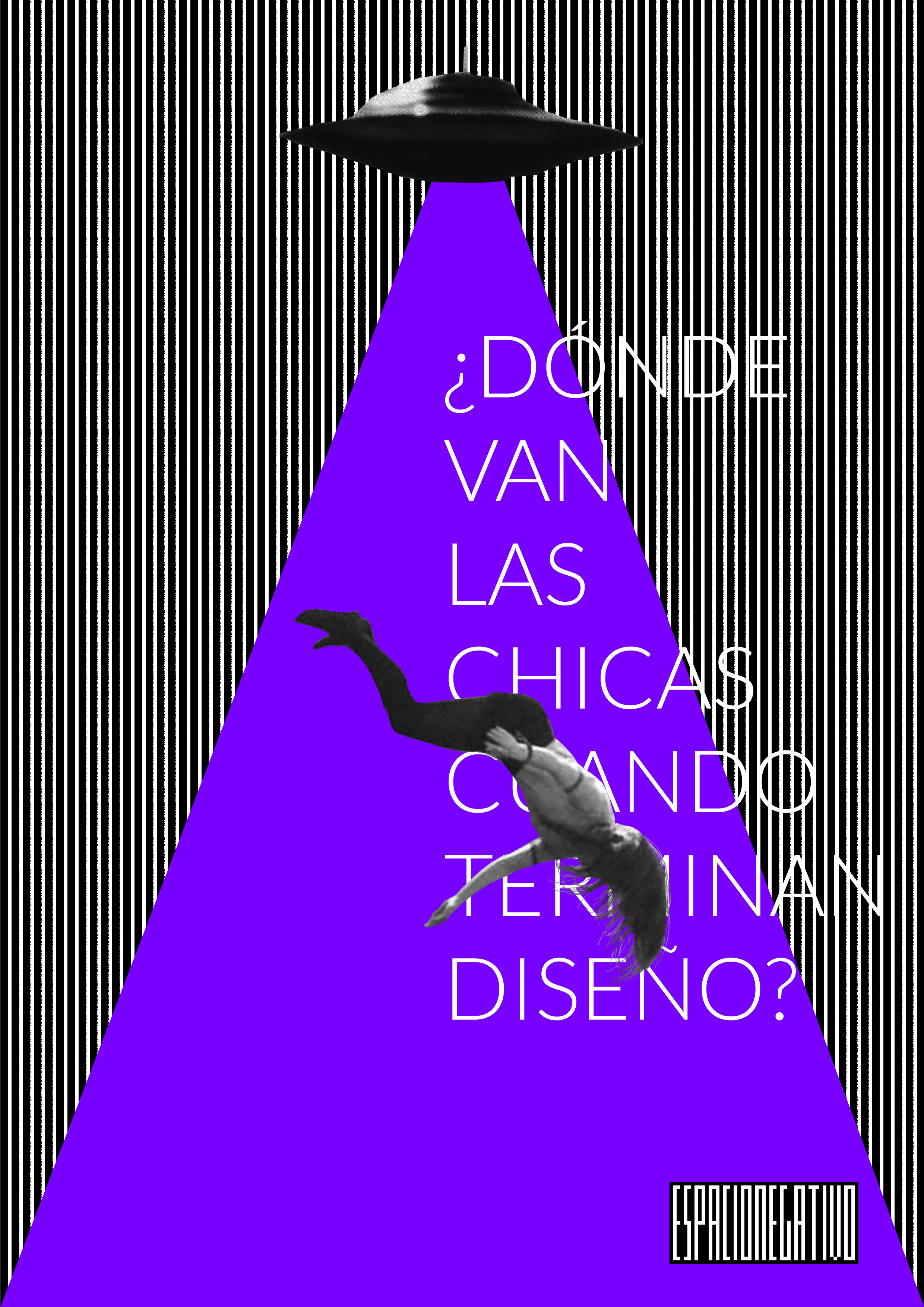
Where do the girls go when they finish their design studies?
Women make up half or more of the student population in many design schools. Yet, as they enter the professional world, their presence becomes increasingly scarce in leadership positions. Why are so few women featured in design history books, invited to conferences or leading creative agencies and studios? The poster uses the absurd idea of women being abducted by aliens after graduation to question this disappearance, pointing to the glass ceiling that continues to limit their access to positions of power.
Next case study